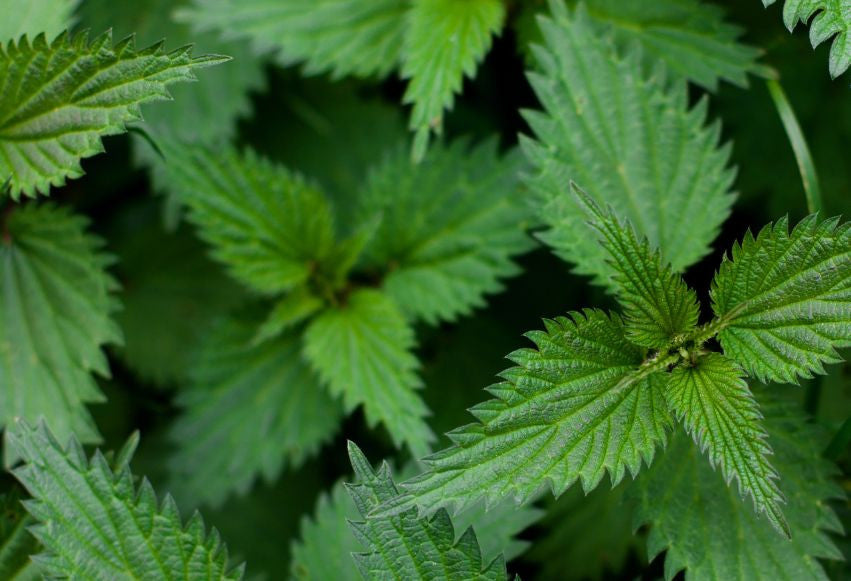
Nettle is undoubtedly one of the most versatile plants, a plant you probably recognize from your beloved grandmother's kitchen. It occurs almost worldwide, and in Europe, it can be found commonly near homes, on roadsides, in thickets, in forest clearings—always in close proximity to humans. Underestimated, nettle is usually associated with childhood and blisters, but properly prepared, it possesses invaluable health, cosmetic, and nutritional benefits, which I'll try to highlight today.
Composition of nettle
Nettle leaves contain chlorophyll, xanthophyll, carotenoids, and an extraordinary amount of vitamins A, C, B2, and K, as well as mineral salts, so-called trace elements such as calcium, magnesium, iron, phosphorus, potassium, and silicon. They also contain flavonoids, tannins, and coumarins. The stinging properties of nettle hairs stem from the presence of formic acid, histamine, and acetylcholine. Nettle roots are composed of lipids, sterols, lecithin, and liglans, while its seeds and fruit are rich in oil composed of carotenoids, polysaccharides, and linoleic acid.
Health properties of stinging nettle
Nettle possesses glucokinin properties, supporting the action of the pancreatic hormone (insulin) in the body, which is responsible for regulating blood sugar levels. The water-soluble secretin contained in nettle (hence the potential for infusions) stimulates the secretory functions of the stomach, pancreas, liver, and intestines. This influences the digestive tract, facilitating digestion and counteracting inflammatory conditions. Nettle has diuretic and antispasmodic properties, helping the body eliminate harmful metabolic waste products. Oral ingestion of nettle increases hemoglobin levels and red blood cell count. Its high vitamin C and easily absorbable iron have beneficial effects on the circulatory system. Thanks to its vitamin K, flavonoids, and tannins, nettle is excellent for heavy bleeding, such as during menstruation. Nettle is also a natural anti-allergic agent due to its substances, which act similarly to antihistamines. Health food stores sell capsules of low-temperature-dried nettle leaves. With the winter weather weakening our bodies and increasing our susceptibility to various infections, it's worth emphasizing nettle's anti-inflammatory properties and its strengthening and immune-boosting properties. How can you boost your immunity with nettle? It's worth consuming nettle juice with honey or making your own nettle honey, which has properties that positively impact the immune system.
Cosmetic properties of stinging nettle
SKIN
Due to its antibacterial, cleansing, and rejuvenating properties, nettle has found a permanent place in cosmetics. It can be used regardless of age or skin condition – as a universal cosmetic, it will work for everyone.
You'll notice the best effects of nettle if you have oily, acne-prone, or vascular-prone skin, primarily because it constricts blood vessels, helps treat unwanted breakouts or skin inflammation, and helps combat excessive sweating. Positive effects of nettle in the fight for beautiful and healthy skin can be achieved both by drinking nettle tea/infusion and by applying it topically in the form of toners or masks.
Nettle tea
Ready-made, dried nettle can be purchased at pharmacies or herbal stores. Just remember to pay attention to the ingredients – only 100% nettle in the nettle counts. You can also harvest and dry it yourself – but remember to do this away from areas exposed to contamination and never during rain or fog. The best time is early morning, after the dew has dried, as only full sunlight and a dry environment will ensure the high quality of the nettle. Once you have purchased or dried nettle yourself, you can start preparing the infusion. Pour hot (not boiling!) water over one teaspoon of the dried nettle and let it steep, covered, for about 10 minutes. Drink the prepared tea up to twice a day with meals. It's important to continue the nettle infusion treatment for a maximum of 3-4 weeks, and remember to take monthly breaks between uses.
Nettle tonic
To prepare nettle tonic, simply pour 3 teaspoons of dried nettle leaves over about half a liter of hot water. Cover and let steep until completely cool. Wash your face with the tonic daily after removing your makeup. It will cleanse and refresh your tired skin, leaving it feeling slightly tight.
Nettle mask
To refresh, rejuvenate, and smooth your skin, a mask made from young nettle leaves (about 20 leaves) mixed with oatmeal (1 tablespoon) and plain yogurt (1 tablespoon) is perfect. Preparing this mask requires harvesting fresh nettle leaves, but it's worth the occasional indulgence for the good of your skin. Wash the nettle leaves under running water, drain excess water, and crush them in a mortar. Grind the aforementioned tablespoon of oatmeal into a powder (e.g., in a coffee grinder) and mix it with the nettle leaf paste and plain yogurt. Apply the mask to cleansed skin and leave on for about 15 minutes, then rinse with cool water. Pat your face dry with a disposable paper towel – this will help maintain 100% facial hygiene.
HAIR
If you have hair prone to dandruff, oiliness, or hair loss, nettle is definitely for you. As an ingredient in shampoos and conditioners, it helps maintain the proper quality of our hair, providing natural care without any chemicals. Nettle strengthens hair follicles and nourishes hair, giving it shine and body.
Nettle-based hair rinse
This rinse should only be used by people with dark hair, as nettle processed in this way has staining properties and may cause unwanted discoloration of the hair. Preparing the rinse is very simple – pour a cup of boiling water over 2 tablespoons of dried nettle and steep, covered, for 30-40 minutes. The resulting infusion is ready to use once it cools. To add shine to your hair and prevent dandruff, use this infusion once a week, after washing your hair.
Nettle lotion for hair growth
Preparing this hair lotion requires the addition of horsetail. Pour cold water over a tablespoon of dried nettle and a tablespoon of dried horsetail and simmer over low heat (do not bring the infusion to a boil) for about 20 minutes. Remove from heat, allow the infusion to cool, and then strain through a strainer. Apply the prepared hair lotion to your hair up to twice a day, immediately after washing and drying.
In summary, you have to admit that nettle should be considered a SUPERPLANT . In today's world, filled with chemicals and preservatives, it's a unique remedy that can be used in every area of our lives while maintaining a sense of safety. However, it's important to remember that nettle is, above all, a potent herb, and its long-term use can lead to undesirable effects, so everything should be done with caution! There are also contraindications to consuming nettle: it should be avoided by pregnant women, those suffering from polycystic ovary syndrome, those with uterine cancer, and those with chronic kidney disease. However, if this doesn't apply to you, feel free to try nettle and experience its spectacular effects today. Use it consistently and patiently for the first results. Good luck!
Agata Bielecka / AGU – She was supposed to be a teacher, but she became a blogger. She owns a blog available at www.agatabielecka.pl . Known online as Agu, she's passionate about cosmetics and everything related to beauty and self-care. She's obsessed with brushes, eyeshadow, and red lips. In her private life, she's a cat lover, a fan of photography, Scandinavian crime novels, austere interiors, good food, and coffee.
