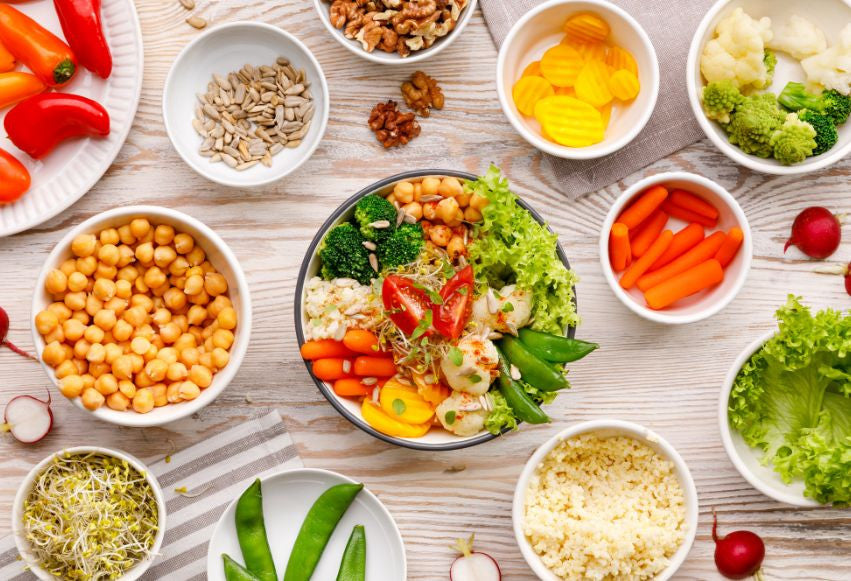
These days, access to information is practically unlimited. We're bombarded with diverse, often contradictory, messages about healthy eating from every direction. Although many myths have long been debunked by scientists, you can still encounter them, even in the press. Although every body is different, certain claims have been supported by research. Do you know all of them?
Don't eat after 6 p.m.
One of the most common myths is that eating after 6 p.m. is harmful. Any snack, especially one high in carbohydrates, will cause weight gain. The truth is, however, that calorie balance is primarily responsible for fat accumulation. So, if dinner meets your daily requirements, there's no need to worry about increased hip or waist circumference. The fact is, however, that evening meals shouldn't be too large or heavy, meaning they're high in fat, which, due to its chemical structure, is digested very slowly. During sleep, when the body should be rebuilding and regenerating, the digestive system shouldn't be burdened by dinner, especially since feeling full can cause sleep problems. Many people even praise a dinner based on complex carbohydrates, which improve the quality of sleep, providing a deeper sleep and greater recovery.
1200 kcal diet
To function properly, the body requires an adequate intake of nutrients: protein, carbohydrates, fats, vitamins, and macronutrients. Radically restricting their intake causes rapid weight loss, often caused by initial water loss. However, this is not a rational approach to weight loss. Firstly, with such a low calorie intake, the metabolism slows down dramatically, which does not promote fat loss; quite the opposite. Secondly, after some time, the metabolism adapts to survive, and further reduction will leave the person severely malnourished and lacking energy, with skin and nail problems and hair loss. In extreme cases, menstruation may also cease due to weight loss, but above all, it is due to a lack of fat, which—along with cholesterol—is the main raw material for hormone production. For this reason, women have a higher need for fats than men. Healthy weight loss requires a plan, healthy eating habits, and, above all, calculating the required calories, taking into account lifestyle, work, and physical activity.
0% fat foods
Contrary to popular belief, fats themselves don't cause weight gain. Regardless of health conditions like thyroid disease, excess weight is primarily caused by a positive caloric balance. Whether this is caused by an excessive intake of protein or carbohydrates, it translates into fat storage. Products labeled "light" often have a reduced caloric value, but they can still help inhibit weight loss. They can also contain significant amounts of simple sugars. This is especially noticeable in yogurts and juices. The use of artificial sweeteners like aspartame, which "healthier" foods are often full of, is also controversial.
Brown sugar is healthier than white sugar
As early as 1931, Nobel Prize-winning German biochemist Otto H. Warburg demonstrated the toxic effects of sucrose on the human body. Brown sugar contains slightly less of it due to its production process, which was completed before the molasses was separated. This results in a slightly higher mineral content compared to sugar made from beets. It's no coincidence that sugar is increasingly being called the " white death ." Regardless of its form, it is equally toxic to the body. It's worth replacing it with xylitol or erythritol, especially since sweets and their effects on the brain and serotonin production can also lead to addiction.
Dark bread is better
Whole-grain bread is healthier than bread baked with refined white flour, but this only applies to naturally leavened bread. The problem is that the grains contain anti-nutritional substances known as phytates. These impede the body's ability to absorb the minerals and vitamins found in grains. The only way to neutralize them is through natural fermentation, which requires several hours of rising. In bakeries, mass-produced bread is replaced by yeast fermentation or powdered sourdough starter. The dark whole-wheat flour used in its production has a slightly lower energy value but is rich in fiber due to the high bran content. However, it is often "faked" and replaced with caramel coloring, which gives the bread an appetizing appearance and aroma.
Juices are healthy
Dieters often reach for ready-made juices, primarily fruit juices, believing that they are a good way to lose weight and improve health. When purchasing, pay attention to the ingredients first. Bottles often contain only 25% fruit, with the rest being water, fillers, preservatives, and artificial flavors. They are also often made from concentrate rather than fresh fruit. Therefore, it's healthiest to choose day-old juices. Their nutritional value is also controversial, due to their high fructose sugar content. A glass of orange juice contains about 100 calories, making it very easy to regain lost weight.
Paulina Czuchaj runs alteregoblog.pl . Outside of her online activities, she spends her time studying, reading, and strength training. She's a fan of long hair, natural skincare, and bold lips.
