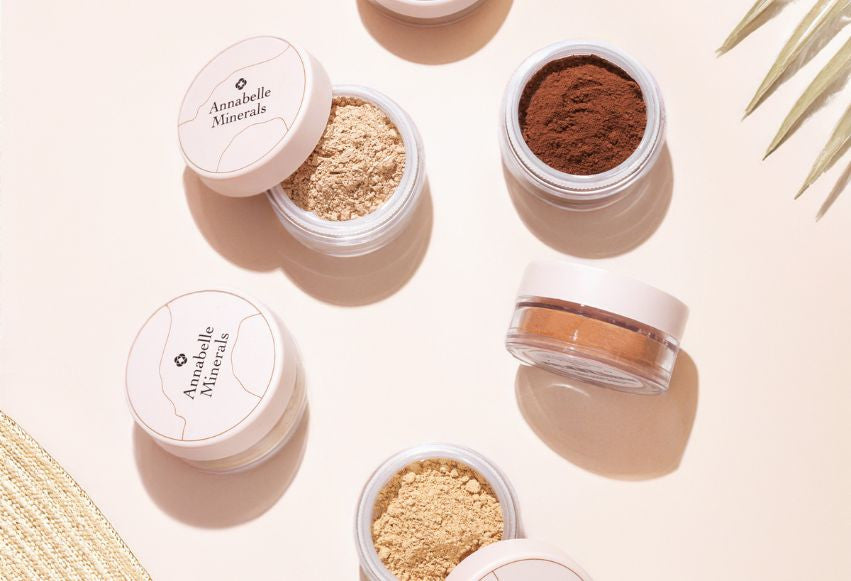
The use of sunscreens is controversial, mainly due to their multitude of chemical ingredients, greasy and heavy formulas that weigh down the skin and clog pores, thorough makeup removal (such heavy textures are extremely difficult and persistent to remove, often requiring two-step cleansing), and the relatively short, ineffective protection they provide. On very hot and sunny days, when the risk of sunburn is high, the products used require reapplication, sometimes even every hour.
It's important to remember that the protection provided by mineral foundations isn't high enough to be considered a substitute for sunscreens, whose primary purpose is to protect against sunburn and care for damaged and permanently sensitized skin. These are specialty pharmacy products that aren't always suitable for daily skincare, unlike minerals, which are lightweight, loose, absorb sweat and sebum well, and also provide protection from UV rays in less hazardous conditions.
Minerals provide low but stable and effective sun protection
This is important, especially in everyday use when there's little exposure to radiation, because the protection factor isn't the issue. In hot conditions, the stability and durability of sunscreens are crucial, especially when reapplication isn't an option. Chemical filters degrade very quickly under the influence of sweat, sebum, and strong UV rays, requiring frequent reapplication, which isn't always possible in conditions other than the beach. Furthermore, they are very sensitive to direct sunlight, so the best protection against sunburn is still physical protection – avoiding sun exposure during peak sunlight (11 a.m.-4 p.m.), using shade, and covering your head and body.
Mineral foundations are based on natural physical filters – zinc oxide and titanium dioxide – which do not bind to the skin and do not absorb radiation. Then, by deactivating them (which can cause the epidermis to heat up), they provide the most safe physical protection for the skin – they reflect radiation. The protection offered by mineral foundations is not high, especially when the manufacturer refrains from using nanoparticles, but the undeniable fact is the high stability of minerals, even in harsh conditions. Protection is provided until the oxides are removed from the skin, and although not high, it does not require constant reapplication (unless the foundation does not adhere to the skin and is quickly rubbed off), which is important if your sun exposure is short-lived but intermittent. A mineral SPF of 10-20 is too low for use in situations with high sunburn risk, but sufficient in urban environments and for those who do not sensitize their skin through aesthetic medicine treatments, exfoliants, or mechanical substances that disrupt the epidermis. Mineral foundations provide at least 85-93% sun protection, in an ultra-light, delicate formula. Mineral foundations do not provide sufficient protection against UVA radiation, so individuals with severe hyperpigmentation, those taking hormonal therapies and contraceptives, and postmenopausal women may notice an exacerbation of the problem.
Mineral foundations adhere well to the skin, and thanks to their loose consistency, they don't weigh the skin down or cause pore clogging like sunscreens. They can regulate the skin and may prove to be an ideal solution for summer, as people who regularly use sunscreen often create an artificial, forced need for exfoliating agents due to the heavy consistency of sunscreens, which contribute to skin impurities.

A matter of priorities
Each skin type has different needs for individual ingredients. Some will breathe a sigh of relief and, in normal sunlight, limit themselves to loose mineral foundations, which are perfectly sufficient for normal, everyday use. However, there are also those who prefer the thick, oily consistency of sunscreens, especially if their skin dries very quickly and loses moisture rapidly. It's important to weigh the pros and cons individually. Sometimes, the simplest solutions prove to be the best. Cosmetics that don't cooperate with the skin not only cause skin problems but also require the use of additional skincare products and often aggressive active ingredients.
Sun protection is very important, but you should consider your skin's individual needs for certain substances, its phototype, susceptibility to irritation, burns, and allergies. Clearly define your daily sun exposure and choose the best solution for you. Mineral foundations are a prime example.
Mineral foundations are free of chemicals. The likelihood of allergies, photoallergies, photosensitivity, or discoloration due to phototoxicity is practically zero. Although they are makeup products, their base (mineral filters) allows them to be considered sun protection, especially since the minerals are applied last, forming a superficial layer that evenly covers the skin, thus fulfilling their protective role.
Mineral foundations can also be applied over sunscreens. They don't destabilize their protection; in fact, they enhance it. Pollen absorbs sebum, preventing excessive sweating, and provides mineral protection, which is very beneficial when using purely chemical filters, which only absorb radiation and are less durable and active when exposed to the sun. Chemical filters can also be combined directly with mineral foundations. Although chemical filters provide the highest level of UVA protection, combinations with mineral filters prove to be the most stable in summer conditions.
Minerals protect against the negative effects of the sun and at the same time do not block the synthesis of essential vitamin D.
This is because their protection range is limited. Mineral foundations don't block 98-99% of incoming sunlight, but they can effectively protect against sunburn (mineral filters primarily provide protection against erythematous UVB radiation). They also don't block vitamin D synthesis due to the partial penetration of radiation and local application. Foundation is most often applied only to the face, while the body should be at least 30-40% uncovered for this important vitamin to be synthesized.
Mineral cosmetics can be perfectly adequate during the spring and summer seasons, providing sun protection in urban environments and for short, transient exposure to the sun. However, they won't protect against sunburn during peak sun hours, nor will they replace a lack of physical protection. They're also not a solution for the beach or for those with severe epidermal damage, when the skin requires special, ultra-high protection.
Ewa Szałkowska – young , ambitious, and creative. Passionate about art, a lover of good food and dark chocolate, she has been passionate about mineral makeup for several years and is learning it from the ground up. With immense passion, she runs a unique online space where she shares her knowledge and experience in skincare for problematic skin in an accessible and creative way. Founder and author of the blog www.ewaszalkowska.com
