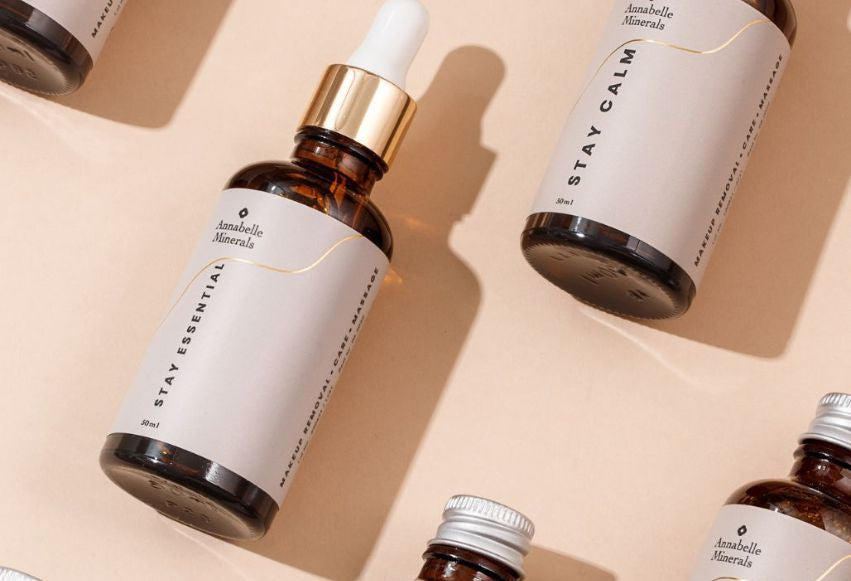
For some time now, natural oils have been at the forefront of natural skincare: they're recommended for day and night use, added to creams and serums, and even used on their own as an elixir. How do they work, and how do you choose the right oil for your skin?
They protect against moisture loss and provide protection against external factors
Fats primarily coat the skin with an impermeable film, protecting it from excessive moisture loss and performing crucial protective functions by increasing resistance to low temperatures and wind. This is especially helpful in winter, when the need for fat naturally increases, as unprotected skin dehydrates very quickly.
Such protection is also required by people with a damaged hydrolipid barrier, typically dry skin, and skin that is dehydrated, for example, due to improper care. Oily emollients envelop the skin, providing an immediate feeling of relief and calm. Applied carefully, they can also work well on typically oily skin, as this type of skin also requires oily protection, but in significantly smaller quantities than other skin types.
Protecting the epidermis, especially the one that truly requires protection, increases its elasticity, smoothness, and resilience, and reduces the tendency to irritation and redness. However, it's important to remember that, like anything else, oils used improperly can contribute to skin deterioration. They can not only cause impurities but also lead to increased dehydration and the development of painful blemishes.

Oils are a source of vitamins and fatty acids
They provide the skin with essential substances that regulate hydration levels in the deeper layers of the epidermis. Oils can be used to soften, smooth, and silky the skin. Fatty vitamins firm the skin and are also powerful antioxidants, protecting against free radical damage. The complexion can become visibly brighter and more resistant to sunlight.
Division of oils
Fats have different structures – from a typical chemical perspective, they differ in chain length, which significantly influences their properties. Apart from the fact that the human body breaks down these fats differently and their metabolism depends on their chemical structure, human skin works in a similar way and also absorbs oils differently.
To avoid complicated names, oils can be divided into three simplest groups: drying, slow-drying and non-drying.
Drying oils have a light, silicone-like consistency, are particularly rich in omega-3 and omega-6 fatty acids, absorb quickly, and are noticeably the least greasy. They are also most susceptible to oxidation, requiring low, refrigerated conditions and having a short shelf life. Refined oils should absolutely be avoided, as they are full of free radicals!
Drying oils include light fractions such as squalane, berry oils, tea seed oil, and tomato seed oil. Fats come primarily from plant seeds and pits.
Slow-drying oils contain more omega-9 fatty acids and a significant amount of saturated fat. Their consistency is firmer and thicker. They are more chemically stable and are found primarily in formulas designed for dry skin.
The most representative types of slow-drying oils are avocado oil and oils from nut-bearing plants and fatty seeds, such as hazelnut, macadamia, plum seed, and musk rose. These oils are the most chemically stable, resistant to oxidation, have a relatively high smoke point, and are usually solid in consistency, melting at temperatures above typical room temperature.
Non-drying oils are primarily saturated fats: coconut oil, palm oil, most vegetable butters, and, of course, animal fats. They strongly protect the skin and are effective in protective cosmetics and makeup removal. They bind impurities well and, with the addition of emulsifiers, rinse off just as easily.
As you can see, despite their similarities, fats differ significantly in their properties. Some spread more easily, making them better suited to oil serums. Others, thanks to their structure, will surprise you with their makeup removal properties. Each skin type will react differently to a given type of oil and achieve different results. In the following articles, you'll surely learn which oil is best for oily skin and which is best for dry skin. Follow our new series to expand and consolidate your knowledge of natural oils!
Ewa Szałkowska – young , ambitious, and creative. Passionate about art, she loves good food, and dark chocolate. For several years, she has been passionate about mineral makeup and is learning it from the ground up. With immense passion, she runs a unique online space where she shares her knowledge and experience in skincare for problematic skin in an accessible and creative way. She is the founder and author of the blog www.ewaszalkowska.com .
