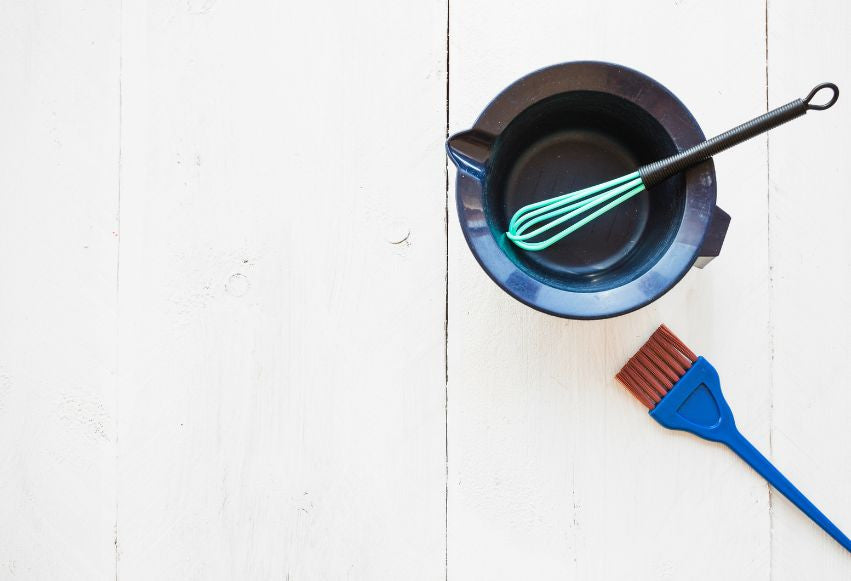
Color-treated hair is one of the most difficult to manage. Color treatments often have a negative impact on it, leaving it dry, dull, and brittle at the ends. So how can you reconcile a beautiful, flattering color that makes you feel exceptionally good with the health of your strands? There are several proven methods. Today, we'll show you how to effectively care for your color and the condition of your strands. Healthy hair can handle invasive treatments much better, and the color lasts longer and is more vibrant.
Care immediately after the procedure
The first, basic step you should take immediately after the treatment is acidification, which involves using a conditioner or rinse with an acidic pH. The oxidant in hair dyes opens the hair cuticles, which can result in a lack of shine and smoothness, and the color itself can fade faster than usual. To restore the proper pH, you can use lemon juice, apple cider vinegar , or even hibiscus. If you don't know how to make such a rinse, check out the article "The Best Home Rinses." Special, ready-made conditioners are also available for color-treated hair; they are often included in color kits. It's also a good idea to dry your hair with a cool stream of air, especially if your hairdryer has an ionic function. It will also smooth your strands if you blow-dry them from root to tip.
Washing
It's one of the main factors in color fading. It's therefore important that the shampoos you use are gentle and not too harsh on already weakened strands. If you need a cleansing shampoo, choose products containing milder SLES and derivatives. However, if your scalp is oily, you can wash it with a slightly stronger product. The OMO method , or conditioner-wash-conditioner, will also protect your hair. The first "O" can easily be used with a product that doesn't perform well on its own; its sole purpose is to protect the hair from the effects of cleansing substances to prevent further drying.
Nutrition
When choosing a mask or conditioner, it's worth paying attention to the hydrolyzed protein content. Their presence should be limited immediately after coloring, although later on, they're a good addition to daily care. For intense colors like red, applying masks and keeping them under a cap for extended periods often doesn't benefit your hair. In such cases, it's worth choosing a moisturizing and nourishing product that works quickly, preventing the color from fading. You can add light oils to conditioners in small amounts, as well as other ingredients like honey or concentrated aloe vera juice . One of the new products on the market is treatments that rebuild disulfide bonds in the hair structure, which translates into a more aesthetically pleasing appearance. Ultraplex is currently the most readily available in Poland and is also recommended as an addition during the coloring process. Hair salons also offer Nanoplex and Olaplex, which work on the same principle.
Oils
If you're a fan of oiling and have been using this hair care method for a while, it's worth giving it a rest just before coloring. Oils create a delicate protective layer on the hair, which can impede the penetration of dye ingredients, and the resulting color may be uneven. However, if you can't imagine life without them, reach for lightweight and easily washable oils, such as almond, avocado, or jojoba. Oiling for a few days after coloring is also particularly beneficial, as it restores shine and softness. It's best to apply a larger amount of product and leave it on for a longer period, then wash it out with a gentle shampoo. Oils that enhance hair color are also available on the market, such as sea buckthorn oil, Indian heenaraa for redheads, or amla for brunettes.
Silicones
Silicones create a protective layer on hair that protects against the harmful effects of weather conditions, protects it during styling, and reduces color fading . Although there's been a noticeable trend to avoid them in recent years, they're not as bad as the media and magazines portray them. They're often essential for maintaining healthy hair. They smooth it, reduce frizz, split ends, and breakage. It's worth combining silicone care with products that also nourish it . To care for your hair comprehensively, rather than just masking damage, periodically treat it to a deep cleanse with an SLS-free shampoo, followed by a mask rich in oils and moisturizing ingredients. Before blow-drying and straightening, don't forget a serum or heat-protective spray, especially on the driest areas. However, make sure it doesn't contain alcohol.
UV filters
Sun exposure can also negatively impact the condition of hair weakened by coloring. A high SPF content protects against lightening or opening of the hair shaft, which results in a loss of intense color. High SPFs are found in products designed for this type of hair, as well as in protective mists. Other natural UV filters include wheat germ oil, wild carrot seed oil , and raspberry seed oil , which have exceptionally high SPF values, up to 50. To protect your hair from exposure to harmful UV rays, spread a small amount of oil between your hands and rub it in, starting with the ends. Apply gradually, as it's easier to reapply than to remove any excess product.
Paulina Czuchaj has been running alteregoblog.pl for four years. Outside of online activities, she spends her time studying, reading, and strength training. She's a fan of long hair, natural skincare, and bold lips.
