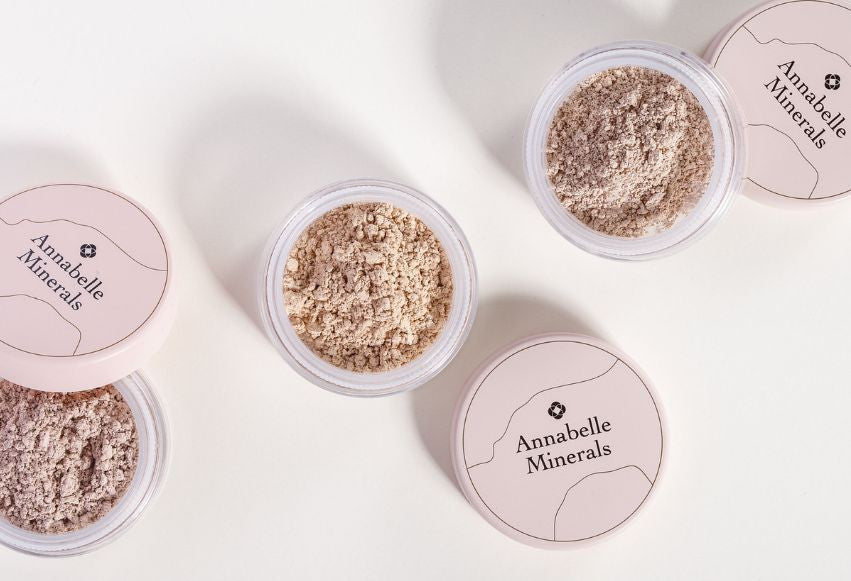
Today, another batch of inspiring, unique, and interesting ideas for using mineral cosmetics has emerged. While some people still have reservations about using mineral products and label them as "difficult to use," the loose form of mineral powders offers a wealth of alternative uses not only in makeup but also in skincare.
Washing powder for cleansing facial skin
To make this cleansing powder, you'll need three basic ingredients: organic coconut milk powder, oat flour, and Annabelle Minerals Clay Primer . Simply measure the ingredients in equal proportions, pour them into a glass jar, shake, and you'll have a ready-to-use product. If you'd like your product to have stronger cleansing and degreasing properties, add more clay primer to the mix.
You have a ready-made cleansing base that you can enrich with additional ingredients, such as dried herbs, essential oils, or ground plant seeds or seeds. Simply add a little water to the base each time or mix it with other cleansing products to enhance its cleansing properties and reduce its greasiness.
The cleansing base doesn't dry out the skin while cleansing it thoroughly. Coconut milk provides essential emollients, while oatmeal gently exfoliates and facilitates effective rinsing of the cleansing powder. The clay primer mineralizes and gently degreases the skin. After using the cleanser, the skin is cleansed, pores are tightened, but the epidermis is not tight or excessively coated with an oily film. Therefore, this cleansing method can significantly reduce not only excessive seborrhea but also stabilize hyperkeratosis, reduce pore clogs, and reduce acne.

Mattifying hair powder (increases volume and prolongs hair freshness)
To make a dry shampoo, mix a clay primer with pure silica in a 1:1 ratio. The clays, combined with the highly oil-absorbing silica, provide strong root lift and long-lasting, lush, fresh locks. Importantly, they don't irritate the scalp like traditional dry shampoo sprays. Additionally, they provide a much longer-lasting mattifying effect. The only downside to this method is that the hair may lose some shine during powder application, but this is completely normal with this type of product.
The powder also prevents hair from becoming frizzy, helps to set the hairstyle and provides very good volume for several hours.
Pressed foundation
To make pressed foundation, you basically need just two ingredients: mineral foundation and food-grade alcohol (over 70% alcohol, preferably 96%, so the alcohol evaporates as quickly as possible and water doesn't shorten the foundation's lifespan by fostering bacteria and fungi), as well as a compact or container in which to place your foundation. Add a small amount of alcohol to the foundation to give it plasticity. Remember, the mixture should be slightly damp, but not runny! Then, knead it very firmly (the less pressed the product, the less pigmented it will be and the greater the tendency to flake and crumble) and allow the alcohol to evaporate.
However, I don't recommend limiting yourself to just these two ingredients, as a foundation without additional ingredients will be very powdery, provide poor coverage, and produce a high dusting level, which will negatively impact its effectiveness. Furthermore, its texture will be very delicate and may crumble and crack at any given time.
How to remedy the above-mentioned problems? To give your foundation a better, softer consistency, increase its coverage, and enhance the experience of using your homemade pressed mineral foundation, add a pinch of vitamin E and a small amount of avocado butter, which has an incredibly pleasant, yet non-greasy consistency. Mix everything together. For a longer-lasting product, you can add essential oils of your choice. Then, add small amounts of alcohol and knead vigorously to create a slightly moist, pliable mass. Transfer to a compact, knead vigorously, and leave until the alcohol has completely evaporated.
You can add small amounts of pure silica or sapphire powder to your foundation. This will prevent the foundation from settling into pores, provide a better smoothing effect, and prevent uneven application and separation. Sapphire powder reflects light and provides a healthy glow, while silica strongly absorbs sebum and guarantees a good mattifying effect.

A foundation with lower coverage but better absorbing properties.
If your mineral foundation is too heavy, flakes, doesn't blend well with your skin, or isn't long-lasting, and the problem lies in its too-heavy coverage and inability to build coverage, dilute it with a clay primer or natural rice flour. The foundation will be less pigmented, provide better mattifying properties, and you can build the final effect as desired. This product also works well as a typical mattifying powder, guaranteeing a slight evenness of skin tone with the first coat.
Ewa Szałkowska – young, ambitious, and creative. Passionate about art, she loves good food, and dark chocolate. For several years, she has been passionate about mineral makeup and is learning it from the ground up. With immense passion, she runs a unique online space where she shares her knowledge and experience in skincare for problematic skin in an accessible and creative way. She is the founder and author of the blog www.ewaszalkowska.com .

