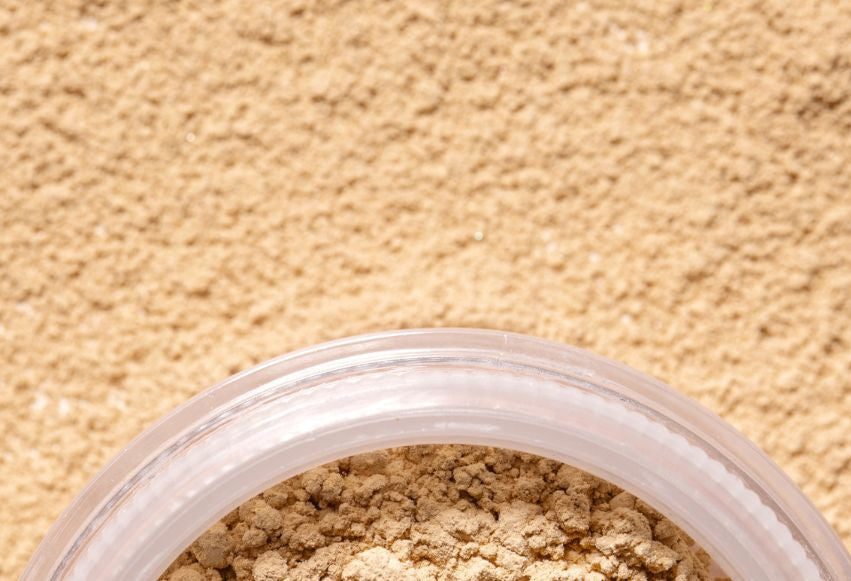
Zinc oxide is one of the main components of mineral foundations, and we use it in Annabelle Minerals cosmetics. Therefore, it's worth writing more about the properties of zinc oxide and the role it plays in our products. While it may be hard to believe, it's an important, though not crucial, ingredient. While there are mineral formulas based solely on zinc oxide, there are also those that are completely free of it, or more often, they contain zinc in the right proportions with titanium dioxide.
Properties of zinc oxide
Zinc has a delicate texture. It is insoluble in water and fats – this is important and helpful information, especially when choosing a cleansing method, as zinc oxide will create dispersions. To properly remove it from the skin, the cleanser must completely rinse it from the epidermis or it should be manually removed using accessories. Zinc oxide has a number of nourishing and protective properties, including a natural mineral filter – it protects the skin like a mirror against dangerous UVB radiation, reflecting rays and minimizing the risk of irritation and sun spots. Thanks to its reflective mechanism, it is ideal for protecting extremely sensitive, damaged, delicate skin, prone to redness. It is also safe for children's extremely thin skin. There are many myths surrounding mineral filters, some of which are not entirely true. The oxides used in Annabelle Minerals mineral cosmetics have a molecule that is too large to penetrate the deeper layers of the skin (even if the skin structure is damaged) and catalyze the generation of free radicals. This is a possibility that can occur under certain conditions when using nanoparticles, which the brand's cosmetics are free from. Zinc white is also an extremely common ingredient in drying powders and healing ointments, and is used in skincare from day one. Zinc perfectly degreases the skin's surface, exhibits healing, regenerative, and antibacterial properties, and is also neutral and safe even with long-term use.
Zinc oxide: role in cosmetics
Zinc oxide has mild covering and mattifying properties. It doesn't provide full coverage and doesn't adhere well to the skin, making it easier to apply foundation evenly and less likely to create a mask-like effect. Zinc oxide doesn't provide full coverage on its own, which is why cosmetics with less coverage often contain more than titanium dioxide or rely solely on it. The dry structure of zinc oxide prevents streaking and smudges and facilitates buildable coverage. Zinc oxide absorbs moisture perfectly, so foundation has noticeable mattifying properties and is more durable on oily skin types. Furthermore, zinc has antibacterial and regulating properties, which is beneficial for acne-prone skin: it dries out breakouts, normalizes sebaceous gland function, and accelerates epidermal regeneration. It's also worth noting the protective effects of zinc oxide – it prevents skin damage caused by sun exposure, a crucial aspect of skincare for problematic, sensitive, and damaged skin, which is particularly susceptible to hyperpigmentation. In short: the more zinc oxide a mineral foundation formula contains, the drier, dustier, mattifier, and less opaque it is. Therefore, formulas that provide lighter coverage will work best on the most problematic, oily skin types. Of course, there are exceptions, as zinc oxide can be modified by the addition of other substances and have a less drying effect.
Ewa Szałkowska – young, ambitious, and creative. Passionate about art, a lover of good food and dark chocolate, she has been passionate about mineral makeup for several years, learning it from the ground up. With immense passion, she runs a unique online space where she shares her knowledge and experience in skincare for problematic skin in an accessible and creative way. She is the founder and author of the blog www.ewaszalkowska.com .
