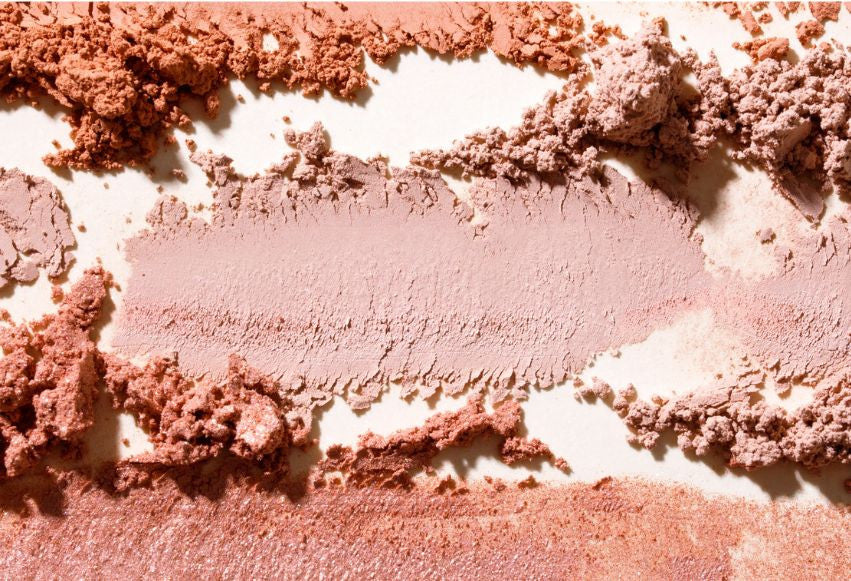
Coloring oxides impart the desired color to Annabelle Minerals mineral cosmetics: they are the base for mineral eyeshadows, blushes, and, in small quantities, foundations and concealers. They allow you to achieve the correct color of the product, even when used in microscopic, pharmacy-grade quantities. What's worth knowing about coloring oxides? Among the wide availability of coloring intermediates, four color components with contrasting shades are mentioned, allowing you to achieve any shade, depending on the proportions used: iron oxide yellow, iron oxide red, chrome green, and ultramarines: most commonly ultramarine blue, a beautiful, deep, cool color, although violet is also increasingly used – it has similar properties to blue but does not extinguish, but merely tones down warm colors. Pigments are particularly helpful in home use when modifying a color that's out of place; their advantage is the ease of use resulting from the flowability of mineral cosmetics. Adding the loose contents of the sachet is therefore hassle-free – the pigments can be easily combined by shaking the container or mixing with kneading movements in the ziplock bags to achieve the desired color. In laboratory practice, this is an essential foundation for any mineral cosmetic, allowing you to enjoy the benefits of mineral makeup.
Coloring oxides: yellows, reds, purples and greens
As I've written before, coloring oxides are responsible for imparting color to mineral cosmetics – omitting such a key ingredient would result in every product having a white, more or less opaque consistency with a luminous finish. It's the addition of iron oxides that allows the foundation to blend seamlessly with the complexion, perfectly camouflaging imperfections like redness, blemishes, and dark circles, and making the product unique in its own way. Typically, your mineral product contains all of the following oxides, but in different proportions depending on the color, color range, and shade of the mineral eyeshadow. Reproducing the color without knowing the formula is not easy, and one could even say impossible.
Iron oxide yellow
Yellow is a neutral color – it neither cools (it does so when combined with ultramarine or chrome green) nor warms (only when combined with iron oxide red) the cosmetic's color. This is a common mistake when choosing mineral foundations. Many people avoid yellow foundations because they associate them with orange, warm tones and cannot imagine using such products on their often pale and flushed complexion. The addition of yellow perfectly conceals fatigue, redness, and dilated capillaries.
Chrome green
It's responsible for olive, cool tones. Green neutralizes redness and strong redness. The fairer the complexion, the more olive tones it typically contains, while the more tanned and darker the complexion, the more contrasting red tones it contains.
Iron oxide red
It warms and tans. It's responsible for orange tones, which can develop when the concentration in a cosmetic is too high. It's easiest to neutralize with chrome green.
Blues and purples (ultramarines)
They gently cool (blues) or mute (purples) warm and neutral colors. They allow you to achieve neutral, muted, and distinctly cool colors.
Coloring oxides should always be used in low concentrations; for some, the concentration should not exceed 0.5% (especially for Prussian blue and ultramarine). They do not function as color cosmetics on their own – their consistency prevents them from being used as loose eyeshadows, blushes, or bronzers. They can be very difficult to blend and remove from the skin and brush bristles. This problem is eliminated when used in reasonable, minimal doses.
Ewa Szałkowska – young, ambitious, and creative. Passionate about art, a lover of good food and dark chocolate, she has been passionate about mineral makeup for several years, learning it from the ground up. With immense passion, she runs a unique online space where she shares her knowledge and experience in skincare for problematic skin in an accessible and creative way. She is the founder and author of the blog www.ewaszalkowska.com .
