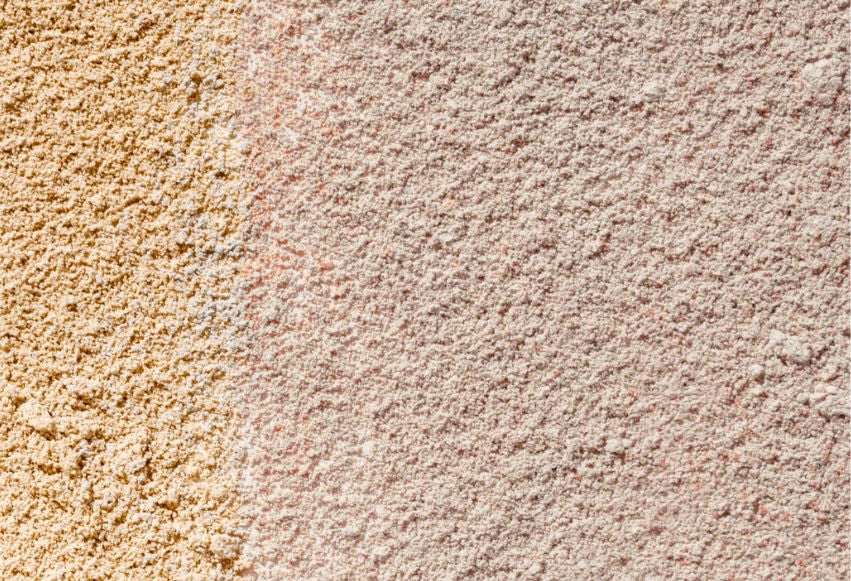
Cosmetic clay is a mineral that's perfect for skincare. It provides the skin with numerous minerals and trace elements. It also contains significant amounts of silicon, calcium, and magnesium. Several types of this cosmetic are available in drugstores. Each has different composition and properties. Green, white, or perhaps red? Which one does what? What should you consider and what should you pay attention to when choosing the right one?
Clays have been used in cosmetics for a long time. Their beneficial effects on the skin are invaluable, making them a worthwhile addition to your skincare routine. The positive aspects of using clay are endless. Their main advantage is their absorption properties, helping to maintain a matte skin for longer. Furthermore, clay is also used in products that delay skin aging, supporting skin regeneration and smoothing the complexion. It is also responsible for tightening pores, evening out skin tone, cleansing the skin of blackheads, and restoring its natural pH.
Types of cosmetic clays
You can find several types of cosmetic clays on drugstore shelves. But how do you choose the right one for you? Here are the most popular ones:
Green clay – recommended for acne and blackheads. It is the most well-known clay and also the most powerful. Its characteristic green color is due to the presence of divalent iron ions. It is especially recommended for those with oily skin and acne. It is also excellent for purulent lesions and blackheads. Green clay has antiseptic properties, absorbs sebum, and gently tightens pores.
Red clay – has very similar properties to its green predecessor, although it is recommended for sensitive and allergy-prone skin. It contains 60% silica and has remineralizing properties. It absorbs excess sebum and impurities, but also seals blood vessels and has a soothing effect. It strengthens and moisturizes the skin. It can be used for problems with broken capillaries. Be careful when using red clay, as prolonged use can darken the skin.
White clay – also known as porcelain clay or China clay, is the most delicate of all clays. It is recommended for those with dry and sensitive skin. White clay is excellent at smoothing out first wrinkles, making it a great choice for those with tired skin and those showing the first signs of aging. It also has anti-inflammatory, astringent, and healing properties. It is often added to healing powders, face shadows, and creams.
Yellow clay – exhibits similar properties to other clays, especially red. It is characterized by a high iron content, which is responsible for its color. Yellow clay has strong disinfecting properties and is perfect for those with oily and combination skin. It regenerates, smooths, and cleanses the skin, and is also excellent for treating blackheads.
Pink clay – a combination of red and white clay in a 1:2 ratio. Pink clay contains silicon, aluminum, iron, magnesium, sodium, phosphorus, potassium, and calcium. It is recommended for delicate and sensitive skin. It soothes irritations and heals wounds. It also has a soothing effect and gently cleanses.
How to use a clay mask ?
- First of all, choose the cosmetic appropriate for your skin type.
- Remember not to mix or knead the clay in a metal container – metal adversely affects its properties.
- Regardless of the consistency of the clay (it is usually in powder form, but you can also buy clay in a tube), always gently spray it with water/rose water/toner/hydrolate to prevent it from drying out.
- Using clay too often can cause irritation and dryness. Use this product no more than twice a week.
- Always wash the mask off your skin thoroughly.
Fortunately, clay isn't an expensive cosmetic you can buy at any drugstore. A mask in a sachet costs around a few zlotys. Stocking your makeup bag with this product can truly improve your skin's condition, and consequently, your appearance and well-being. Find your color and enjoy healthy, nourished skin.

